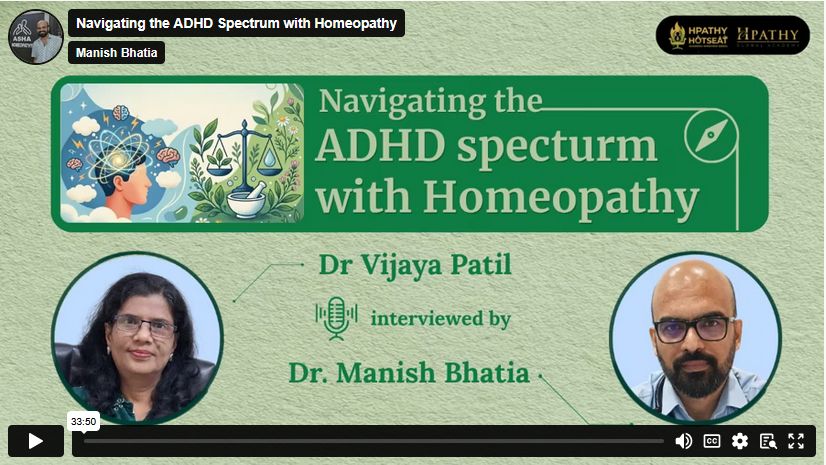
Dr. Manish Bhatia interviews Dr. Vijaya Patil, MD(Hom), an international educator and specialist in pediatric neurodevelopment with over three decades of experience.
In a recent interview for the Hpathy Hot Seat, Dr. Vijaya Patil, interacted with Dr. Manish Bhatia to discuss her evolution into a leading voice in homeopathic treatment of neurodevelopmental disorders.
The Learning Curve: Clinical Knowledge vs. Homeopathic Symptoms
Dr. Patil admits that early in her career, the nuances of the DSM (Diagnostic and Statistical Manual) were not part of the standard homeopathic curriculum.
“In that first child I treated, restlessness was not a characteristic of the child – it was a characteristic of the disorder,” she reflects.
Without understanding the underlying pathology, it is impossible to distinguish between a common symptom (expected in ADHD) and a characteristic symptom (unique to the individual). True progress began when she bridged the gap between basic science and therapeutics, integrating clinical diagnostics into her holistic approach.
The Power of the “Characteristic” Symptom
A significant challenge in neurodevelopmental cases is that they are often “one-sided,” meaning they lack the rich symptomatic tapestry homeopaths usually rely on. Dr. Patil and Dr. Bhatia shared fascinating examples of how a single, bizarre “PQRS” (Peculiar, Queer, Rare, and Strange) symptom can unlock a case:
The “Throwing” Child: Dr. Patil treated a hyperactive child whose primary symptom was throwing and breaking everything (remotes, antennas, TVs). The breakthrough came not from the hyperactivity, but from an intense craving for bananas and a history of respiratory issues, leading to the remedy Tuberculinum.
The Tomato Case: Dr. Bhatia recalled an autistic child with almost no symptoms except an intense craving for tomatoes, which was successfully resolved with Lycopersicum.
These “miracles” highlight that while common remedies like Stramonium, Tarentula, and Lycopodium are frequent players, any remedy – such as Onosmodium for a child who cannot finish a sentence – can be the key if the characteristics fit.
A Holistic, Preventive Approach
Dr. Patil emphasizes that treating ADHD is never about a single disorder. It is an “intermingled” web of intellectual traits, language delays, and sensory impairments. Her approach is three-fold:
Integrated Therapy: Combining homeopathy with occupational and sensory integration therapy for faster progress.
Parental Guidance: Moving beyond the stigma and helping parents manage the “plight” of raising a neurodivergent child.
Prevention: Educating parents on maternal health and pregnancy precautions to mitigate risks before they manifest.
Join the Upcoming Webinar
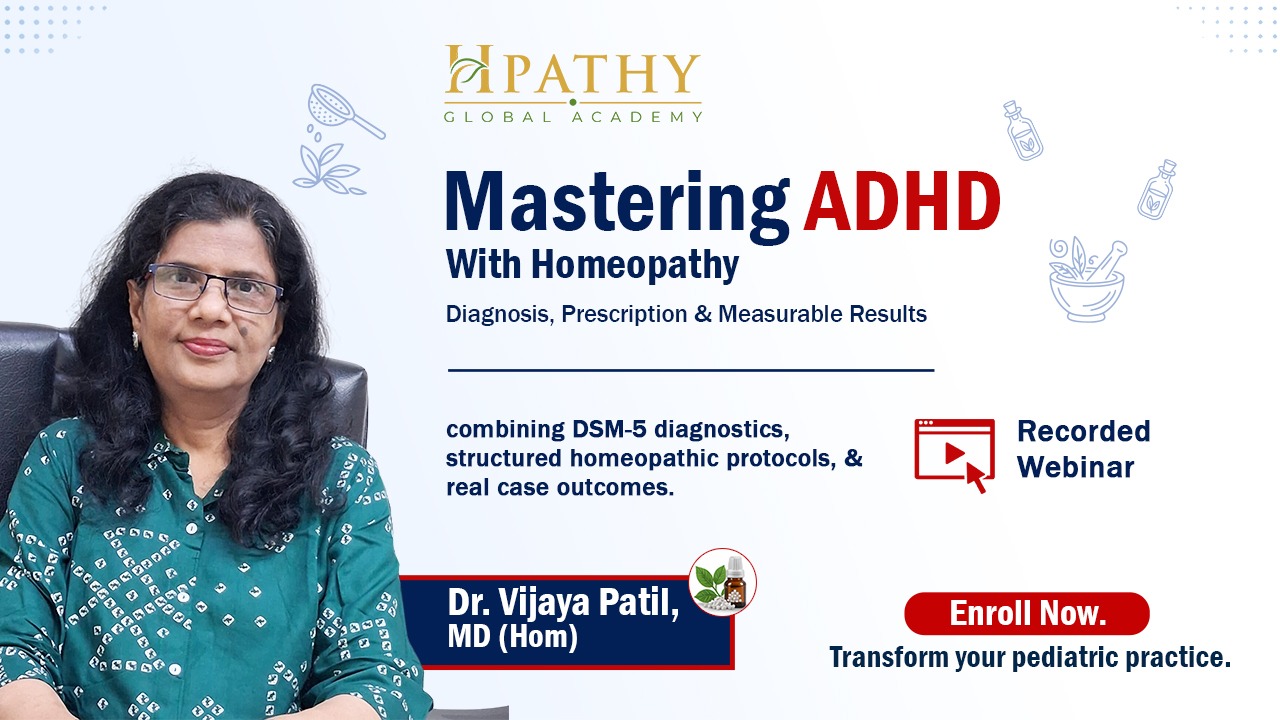
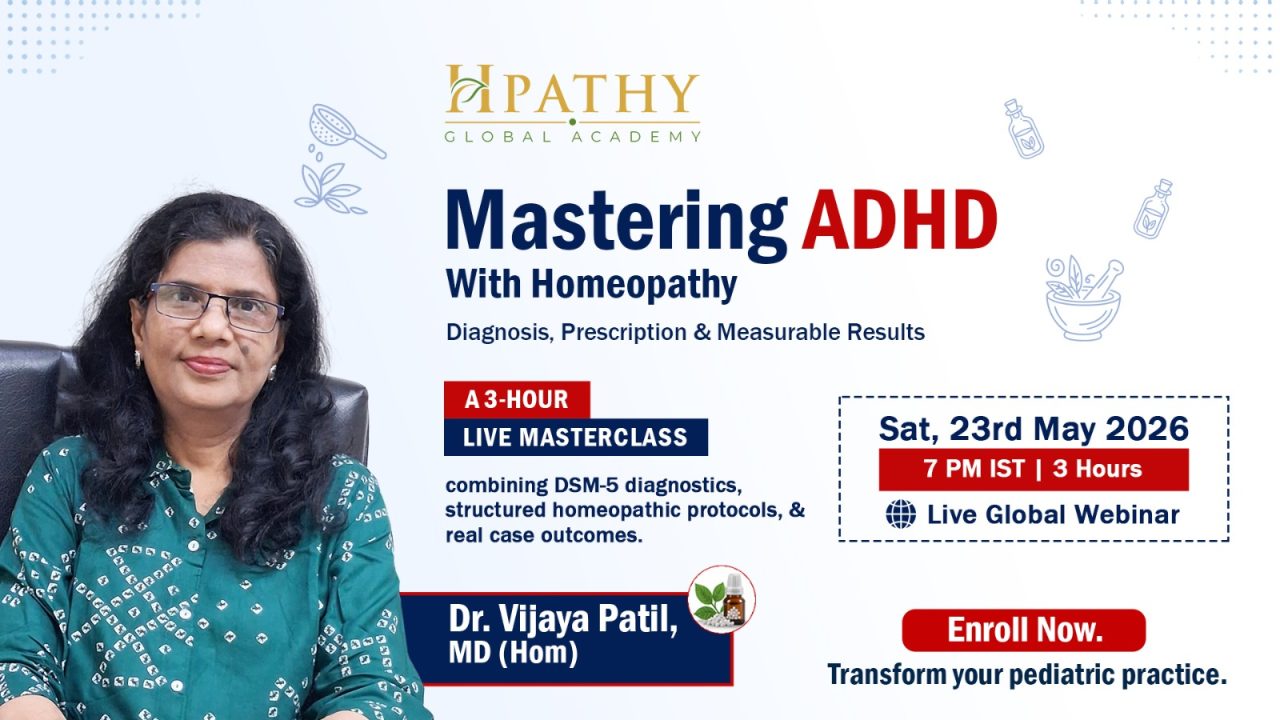
To help practitioners navigate these complex cases, Dr. Patil will be hosting a comprehensive webinar at Hpathy Global Academy on the 23rd of May 2026.
She will cover:
Practical screening tools for your clinic
Detailed case-taking techniques to find PQRS in maternal and birth histories.
How to differentiate remedies and manage long-term follow-ups.
Ready to master the homeopathic approach to ADHD?
Visit https://hpathy.org/courses/mastering-adhd-with-homeopathy-diagnosis-prescription-and-measurable-results/ to sign up and learn from Dr. Patil’s 34 years of clinical wisdom. Don’t miss the chance to turn “jumbled” symptoms into life-changing results.
More about Dr. Vijaya Patil:
From leading government-backed research on Childhood Autism to training practitioners worldwide via TQFS Academy, Dr. Patil has dedicated her career to treating complex cases of ADHD, Dyslexia, and chronic pathology. She is the founder of Sparsh Homoeopathy and a leading voice in bridging the gap between basic science and homeopathic therapeutics. She is also an international speaker on homeopathy.