
About Course
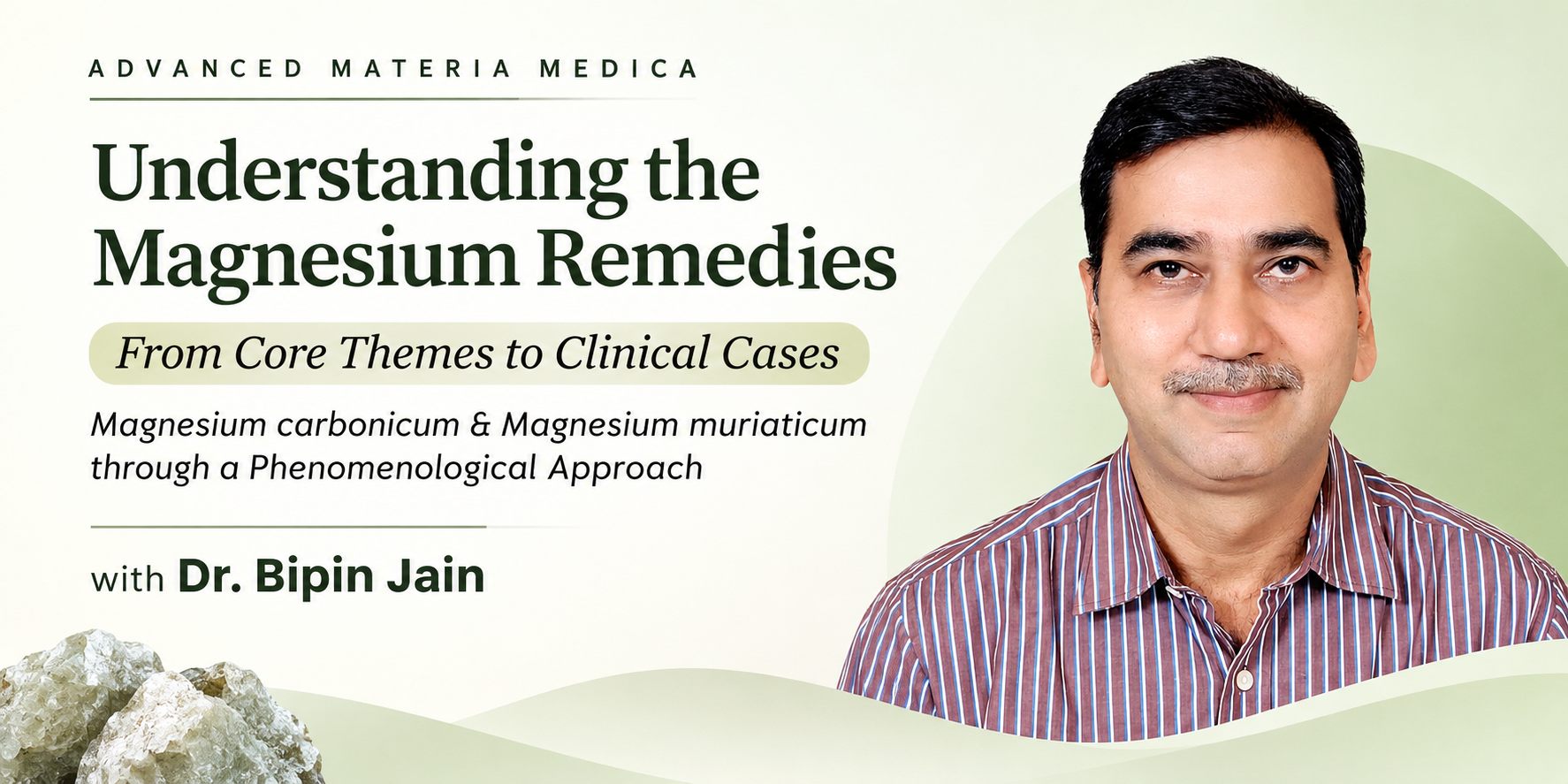
Explore the deeper patterns of Magnesium carbonicum and Magnesium muriaticum through phenomenology, remedy differentiation, and clinical case analysis.
Instructor: Dr. Bipin Jain
Principal, Professor of Homeopathic Materia Medica & Director of Academic Services, MLDMHI
Course Focus: Magnesium Remedy Family | Phenomenological Materia Medica | Clinical Case Analysis | Remedy Differentiation
Go Beyond Symptoms. Understand the Remedy State.
What connects the seemingly unrelated mental, emotional, and physical symptoms of a homeopathic remedy?
How can feelings of rejection, an unmet need for affection, emotional suppression, and an overwhelming sense of responsibility form a recognizable pattern within the Magnesium remedy family?
In this thought-provoking clinical lecture, Dr. Bipin Jain explores the deeper dynamics of Magnesium carbonicum (Mag carb) and Magnesium muriaticum (Mag mur) using a phenomenological approach to Materia Medica.
Rather than studying remedies as collections of disconnected symptoms, Dr. Jain demonstrates how to identify the underlying patterns that bring a remedy picture together.
Through detailed clinical cases, he explores the relationship between a patient’s life experiences, emotional responses, coping mechanisms, and physical complaints—offering a framework for understanding the Magnesium remedies in clinical practice.
Discover how to move from memorizing symptoms to recognizing meaningful remedy patterns.
What You Will Learn
1. Understand the Essence of the Magnesium Remedy Family
Explore the recurring emotional and behavioral themes associated with Magnesium remedies, including:
-
The longing for love, affection, and acceptance.
-
Feelings of rejection, abandonment, and forsakenness.
-
Emotional suppression and difficulty expressing personal needs.
-
Overworking, overgiving, and striving for recognition.
-
The relationship between emotional experiences and physical symptom patterns.
Learn how these themes may manifest differently across individual Magnesium remedies.
2. Apply Phenomenology to Materia Medica
Discover a method of studying remedies that goes beyond isolated symptoms and keynote memorization.
-
Understand the principles of phenomenological analysis.
-
Learn to connect proving symptoms, clinical observations, and patient experiences.
-
Explore the distinction between subjective interpretation and objective observation.
-
Develop a more integrated understanding of the remedy picture.
3. Differentiate Mag carb and Mag mur
Explore the similarities and distinguishing characteristics of two important Magnesium remedies:
-
Magnesium carbonicum — its characteristic emotional patterns, behavioral responses, and physical expressions.
-
Magnesium muriaticum — its distinctive remedy dynamics, relationships, and organ affinities.
-
How the broader Magnesium themes may take different forms in individual patients.
-
How clinical context and characteristic symptoms contribute to remedy differentiation.
4. Follow the Patient’s Journey from Causation to Pathology
Study the connections between life experiences, emotional responses, and the evolution of symptoms.
Dr. Jain discusses:
-
Fundamental, predisposing, exciting, and maintaining causes.
-
Emotional suppression and its proposed relationship with physical complaints.
-
The importance of concomitant symptoms.
-
The progression from functional disturbances to more established pathology within the presented cases.
5. Learn Through Detailed Clinical Cases
Follow Dr. Jain’s reasoning as he analyzes cases involving:
-
Dyspepsia and digestive disturbances.
-
Emotional suppression and unmet expectations.
-
The desire for appreciation and recognition.
-
Skin manifestations and vascular complaints.
-
Venous stasis and structural pathology.
See how the patient’s history, characteristic symptoms, and broader remedy themes are brought together in the process of homeopathic case analysis.
Course Curriculum
Module 1: Introduction to Phenomenological Materia Medica
-
What is phenomenology, and how does it relate to homeopathy?
-
From proving symptoms to an integrated remedy understanding.
-
Observation, interpretation, and the role of the physician.
-
Recognizing meaningful patterns in Materia Medica.
Module 2: Understanding the Magnesium Remedy State
-
The emotional dynamics of love, rejection, and forsakenness.
-
Suppression, dissatisfaction, and unmet emotional needs.
-
Overdoing and the search for appreciation.
-
Dreams, subconscious expressions, and somatic manifestations.
Module 3: Clinical Case Analysis — Magnesium Remedies in Practice
Case Study 1: Emotional Suppression and Digestive Complaints
-
Exploring the patient’s life history and emotional responses.
-
Understanding the desire for recognition.
-
Analyzing dyspepsia and associated symptoms.
-
Examining the relevant Mag carb and Mag mur themes.
Case Study 2: From Disposition to Physical Pathology
-
Exploring characteristic patterns of behavior and response.
-
Analyzing vascular complaints and venous stasis.
-
Understanding the development of the clinical picture.
-
Integrating remedy themes with individualizing symptoms.
Module 4: Remedy Differentiation and Clinical Integration
-
Comparing Magnesium carbonicum and Magnesium muriaticum.
-
Evaluating causation, concomitants, and organ affinities.
-
Testing proposed remedy themes against clinical observations.
-
Applying phenomenological reasoning to future Materia Medica study.
Meet Your Instructor — Dr. Bipin Jain
Dr. Bipin Jain is an experienced homeopathic educator, author, and academic leader known for his contributions to Materia Medica teaching and homeopathic education.
He serves as Principal, Professor of Homeopathic Materia Medica, and Director of Academic Services at MLDMHI.
His academic and professional contributions include:
-
National Academic Leadership: Member and Convener of the Core Committee, CBDC, Homeopathic Education Board, under the National Commission for Homeopathy.
-
Teaching Excellence: Recipient of the Chinmakar Award from the World Joint Doctor Forum and the Best Teacher Award from the Cancer Institute of TTA & Homeopathic Science Congress.
-
Authorship: Author of Rhea: The Wounded Hero and the MARS series.
Through his teaching, Dr. Jain encourages students and practitioners to explore Materia Medica as an interconnected body of knowledge rather than a collection of isolated facts.
Who Should Enroll?
This course is particularly valuable for:
-
Practicing homeopaths who want to deepen their understanding of Magnesium remedies and strengthen their remedy differentiation skills.
-
Homeopathy students seeking a more conceptual and clinically oriented approach to Materia Medica.
-
Homeopathic educators interested in phenomenological methods of teaching and remedy analysis.
-
Experienced clinicians looking to explore connections between patient narratives, emotional themes, and characteristic remedy pictures.
Why Take This Course?
A deeper understanding of Materia Medica begins when individual symptoms become part of a recognizable whole.
In this lecture, you will explore not just what characterizes Magnesium carbonicum and Magnesium muriaticum, but how their characteristic patterns can be understood and differentiated.
Move beyond memorization. Explore the underlying remedy dynamics. Develop a more integrated approach to Materia Medica.
Enroll Now and Explore the Magnesium Remedy Family with Dr. Bipin Jain
Part of Remedy Roundtable 2025
This lecture was originally presented as part of Remedy Roundtable 2025, a collection of advanced Materia Medica lectures by homeopathic educators and clinicians.
Interested in exploring more remedies and clinical perspectives?
Course Content
Magnesium group of remedies
-
Magnesium group of remedies
00:00
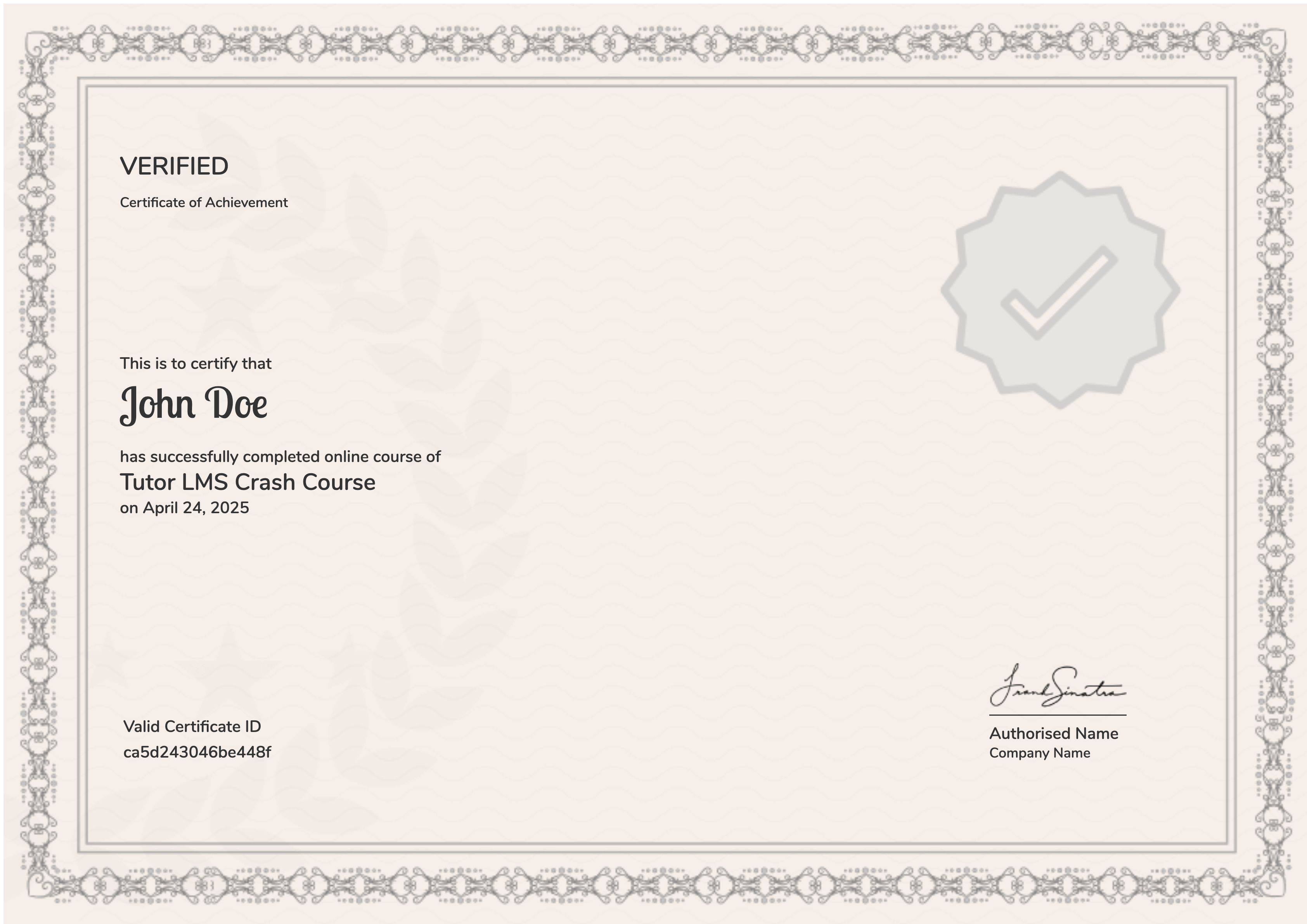
Get a certificate
Participants who complete the programme will receive a downloadable certificate of participation from Hpathy.
Student Ratings & Reviews
